• Features
  • Videos
  • Podcasts
  • Specials
  • Articles
  • Shorts
Donate
  • English
  • Español (Spanish)
  • Français (French)
  • Bahasa Indonesia (Indonesian)
  • Brasil (Portuguese)
  • India (English)
  • हिंदी (Hindi)
  • বাংলা (Bengali)
  • Swahili
  • Videos
  • Podcasts
  • Articles
  • Short News
  • Feature Stories
  • The Latest
  • Explore All
  • About
  • Team
  • Contact
  • Donate
  • Subscribe page
  • Submissions
  • Privacy Policy
  • Terms of Use
  • Advertising
  • Wild Madagascar
  • For Kids
  • Mongabay.org
  • Reforestation App
  • Planetary Health Check
  • Conservation Effectiveness
  • Mongabay Data Studio

Top stories

Installing an IFAW-supported temporary solar fence in Chikomeni chiefdom, within the Malawi-Zambia Transfrontier Conservation Area, to deter human-elephant conflict. Image courtesy of IFAW.

Radio and satellite alerts help Zambian farmers live with dangerous wildlife

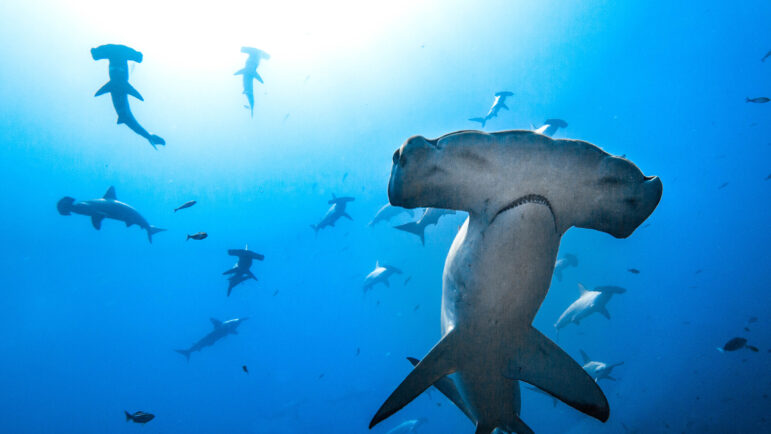
At world’s largest shark conference, scientists warn of a grim outlook across the board

Philip Jacobson 14 May 2026
Ivonne Kienast at Dzanga Bai

Studying the world’s largest gathering of forest elephants with sound and field observation

Rhett Ayers Butler, David Akana 19 Apr 2026

Flagship conservation platforms SMART and EarthRanger join forces in new tech partnership

Maxwell Radwin 17 Mar 2026
A pack of lions in Botswana.

DNA fingerprinting convicts Zimbabwe lion poachers in landmark case

Spoorthy Raman 5 Mar 2026

The lab-in-a-backpack busting illegal shark fins: Interview with Diego Cardeñosa

Philip Jacobson 18 Dec 2025
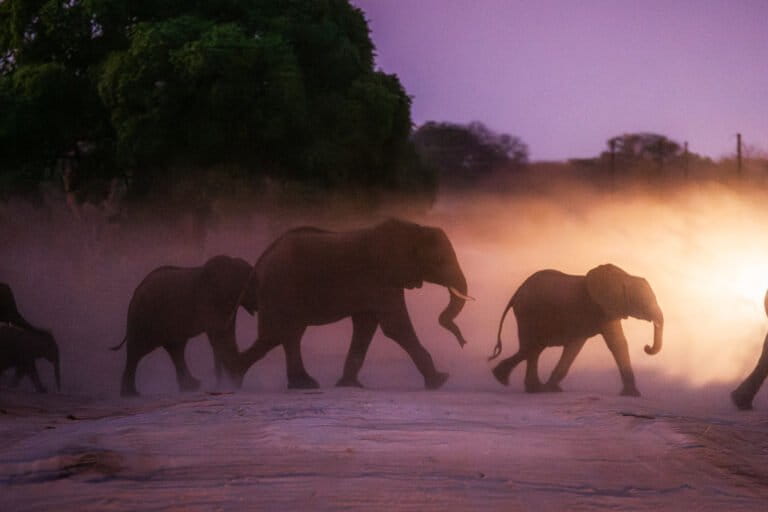
A herd of elephants crosses the M10 highway en route to the Zambezi River, Zambia.

Corridors, not culls, offer solution to Southern Africa’s growing elephant population

Ryan Truscott 11 Dec 2025
Mark Erdmann releasing a thresher shark. Photo courtesy of Mark Erdmann.

Sharks didn’t rebound—so Mark Erdmann is putting them back

Rhett Ayers Butler 13 Jul 2025
Wollastonite spreading in Canada.

Calls for caution as enhanced rock weathering shows carbon capture promise

Sean Mowbray 29 Oct 2024
Glaciers play an important role in the balance of water cycles and ecosystems. Although receding glaciers can degrade these systems, they also serve as an indicator of climate change. We can use Earth-observation satellite imagery to monitor and track glaciers from space. This Landsat 8 image shows glaciers surrounding Lake Sofron, Alaska. Blue areas indicate glacial extent; red areas indicate extensive moraine from glacier debris.

50 years of geographic insight: In interview with Jack Dangermond on Esri's journey and the future of GIS

Rhett Ayers Butler 28 Oct 2024

Latest

Chinese pangolin

In Bangladesh, scientists learn what happens after rescued pangolins return to the wild

Carolyn Cowan 16 Jun 2026

To improve its floundering fisheries, Kenya boosts data collection on artisanal fleet

Anthony Langat 12 Jun 2026

Why conservation urgently needs acoustic baselines

Rhett Ayers Butler 9 Jun 2026

Nature’s feedback loops can drive collapse. Thomas Crowther thinks they can also drive recovery

Rhett Ayers Butler 1 Jun 2026

On Southeast Asia’s largest lake, locals wield tech to defend the flooded forest

Claire Turrell 19 May 2026
Feature story

Radio and satellite alerts help Zambian farmers live with dangerous wildlife

Ryan Truscott 15 May 2026

Egyptian teens use robots for ‘smarter and more responsive’ way to protect Earth

Victoria Schneider 14 May 2026
Feature story

At world’s largest shark conference, scientists warn of a grim outlook across the board

Philip Jacobson 14 May 2026

New data platform aims to reduce conflicts between First Nations and businesses in Canada

Olivia Ferrari 12 May 2026

AI is a double-edged sword for Indigenous stewardship, say U.N. experts

Aimee Gabay 24 Apr 2026
All news

We’re a nonprofit

Help us tell impactful stories of biodiversity loss, climate change, and more
Donate

Read articles on topics such as animalsforestsoceansconservationindigenous peoples all topics

In-depth feature stories reveal context and insight

Feature story

The lab-in-a-backpack busting illegal shark fins: Interview with Diego Cardeñosa

Philip Jacobson 18 Dec 2025
A herd of elephants crosses the M10 highway en route to the Zambezi River, Zambia.
Feature story

Corridors, not culls, offer solution to Southern Africa’s growing elephant population

Ryan Truscott 11 Dec 2025
Mark Erdmann releasing a thresher shark. Photo courtesy of Mark Erdmann.
Feature story

Sharks didn’t rebound—so Mark Erdmann is putting them back

Rhett Ayers Butler 13 Jul 2025
Wollastonite spreading in Canada.
Feature story

Calls for caution as enhanced rock weathering shows carbon capture promise

Sean Mowbray 29 Oct 2024

Subscribe

Stay informed with news and inspiration from nature’s frontline.
Newsletter

Quickly stay updated with our news shorts

National platform launches in Australia to turn wildlife imagery into action

Megan Strauss 2 Jun 2026
Wildlife monitoring in Australia could get a boost from a new platform that uses AI and computer vision to speed up the processing of millions of camera trap images being collected across the country. The national initiative named the Wildlife Observatory of Australia (WildObs) is a way to collect, store and share camera trap data at scale, while improving collaboration between scientists, governments and environmental groups, according to the WildObs website. The platform is being developed by researchers at the University of Queensland (UQ), with backing from the Australian Research Data Commons, Queensland Cyber Infrastructure Foundation and the Terrestrial Ecosystem Research Network. Camera traps are commonly used to monitor wildlife globally: they’re easy to set up and can be left at locations for long periods, providing an invaluable window into the natural world. Across Australia, thousands of projects collect millions of images, Matthew Luskin, associate professor at the UQ School of the Environment and director of WildObs, said in a statement. However, processing the images and identifying species takes time, money and computing power. WildOBS plans to speed it up. “In conservation, timing matters and detecting problems early can mean the difference between recovery and extinction,” Luskin said. WildObs requires users of the platform to upload images, which get stored and processed in the cloud. The platform’s models have been trained specifically to identify species found in Australia and can help track biodiversity trends, monitor invasive species and identify conservation priorities, according to the UQ statement. “In one collaborative space, the WildObs platform now hosts all of Australia’s AI computer vision models. These have been trained specifically for Australian animals and environments — they can identify hundreds of species in camera trap images, 10 times faster than people,” Luskin said. Meredith Palmer, an expert in camera trapping and conservation tech at Yale University, U.S., who was not involved in the project, told Mongabay by email: “The fields of ecology and conservation science have suffered in the era of big data due to silos between organizations and institutions, so an infrastructure that helps break down these barriers, standardize information, and encourage data sharing is an impressive step forward in this space.” Luskin said in the statement, “Better data use can directly improve conservation outcomes — more effective protection of threatened species, smarter investment in conservation, and stronger environmental reporting.” The value of data on WildObs could extend beyond its direct research and conservation use in Australia. Roland Kays, a research professor at North Carolina State University, U.S., who was not involved in the project, told Mongabay by email that it’s “great to get Australian camera trappers ‘on the map’ since much of their data has been unavailable for global comparisons, leaving a blank space in those papers.” Banner image: A purebred dingo caught on camera trap on K’gari, the world's largest sand island. Image by Zachary Amir/University of Queensland.
A purebred dingo on K’gari, the world's largest sand island.

Brazil Congress passes bill to bar use of Amazon deforestation satellite tool

Shanna Hanbury 28 May 2026
Brazil’s Congress has passed a bill prohibiting environmental agencies from using satellite images to restrict the commercial use of illegally deforested lands. Instead, areas suspected of illegal deforestation will have to be confirmed by authorities on the ground. Supporters say satellite-only enforcement infringes upon farmers’ right to a fair defense. Its critics, which include the environment ministry, warn the measure will weaken environmental protection and create unsafe conditions for IBAMA, Brazil’s federal environmental police. The bill, passed May 20, could jeopardize around 70% of IBAMA’s actions in the Brazilian Amazon, Jair Schmitt, director of environmental protection with IBAMA, told Agência Pública.  IBAMA currently uses satellite imagery to detect illegal deforestation and issue land-use restrictions, which prohibit farmers from selling products from illegally deforested land. DETER, the satellite monitoring system run by Brazil's National Institute for Space Research, processes georeferenced forest cover imagery every 15 days to identify deforestation hotspots and send alerts to IBAMA, which can immediately block the area from commercial activity. If the bill is signed into law, officials would need to send inspectors to the site in person to take immediate action. On the ground enforcement is already a significant challenge. Brazil has about 1,250 agents to patrol a forest roughly the size of Western Europe. IBAMA officials warn banning satellite technology makes enforcement in such remote areas significantly slower and more expensive. “It’s like wanting to put down our cellphones and go back to sending messages by fax,” Schmitt told Mongabay journalist Fernanda Wenzel.  Between January and September 2025, IBAMA issued 3,520 land blocks for deforestation; 60% of them were in the Brazilian Amazon. The bill’s creator, congressman Lucio Mosquini, argues the bill gives farmers time to respond to an alert with further clarifications before a remote block on their land. “We must guarantee every Brazilian citizen the right to defense and due process,” Mosquini said in Congress. “We cannot override legal procedures in the name of an environmentalist ideology.” Congresswoman Marina Silva, Brazil’s former environment minister, said the bill will endanger environmental police agents. In March 2025, five agents were ambushed by a group of 30 people during an illegal logging operation in the Tenharim Marmelos Indigenous territory in Amazonas state. An environmental police vehicle was set on fire, and the agents hid in the forest to escape gunfire. “It is unjust to expose [inspectors] to face-to-face operations where they are met with gunfire from people who invade and illegally seize public and Indigenous lands,” Silva said before the vote in Congress. “It’s equivalent to saying that a traffic fine identified by a radar is only valid if it is issued face-to-face between a federal highway police officer and the offender.” The bill will now be sent to the Senate for consideration. Banner image: Environmental police operation against illegal deforestation in Espigão do Oeste, Rondônia in the Brazilian Amazon. Image courtesy of Fernando Augusto/Ibama.
Environmental police operation against illegal deforestation in Espigão do Oeste, Rondônia in the Brazilian Amazon. Image courtesy of Fernando Augusto/Ibama.

More than 1,000 uncharted coral reefs mapped in vast, understudied northern Australia

Megan Strauss 21 May 2026
Scientists have layered hundreds of satellite images to reveal more than 1,000 previously uncharted coral reefs in the turbid waters of northern Australia. The number is comparable to the Great Barrier Reef, though many reefs are smaller in size, researchers say. The reefs of northern Australia, while probably known to locals, had previously largely remained under surveyed. Project leader Eric Lawrey from the Australian Institute of Marine Science (AIMS) wondered why, as he explored satellite imagery of the coastline and noticed shapes that looked like reefs. The possible reefs were located in deep, turbid and sediment-rich waters, making them hard to discern in a single image. “If you look at any one satellite image, the water just looks like turquoise paint and you can’t really see reefs,” Lawrey said in a media release. So Lawrey had the idea to layer 200 satellite images of each area, taken at different times. In this composite image, “all the swirly patterns of the moving water move around and average out while the reefs are constant,” he said. Using this new composite imagery technique, the team from AIMS in partnership with the University of Queensland (UQ) mapped the reefs from Houtman Abrolhos in Western Australia all the way through to western Cape York in Queensland. The resulting work defined the location of more than 3,600 coral reefs and 2,900 rocky reefs, or reefs formed by geological processes. These reefs likely support an array of marine life. [caption id="attachment_319868" align="aligncenter" width="1536"]The newly mapped reefs of northern Australia. Image The newly mapped reefs of northern and northwestern Australia. Image © AIMS/Eric Lawrey (CC BY4.0).[/caption] The northern Australian coastline has been mapped in marine charts to alert approaching vessels, but those maps don’t clearly distinguish between rocky and coral reefs, the researchers say. The recent project provides the “first comprehensive view of coral reefs boundaries across northern Australia,” according to the statement from AIMS. This offers “planners, Traditional Owners, and managers a much clearer view of reef and habitat locations." "Northern Australia is so vast and comparatively understudied, so identifying more than 1,000 previously uncharted reefs highlights that important gaps in our understanding of reef distribution still exist – particularly in more turbid areas where it has traditionally [been] more difficult to ‘see’ these reefs,” Jody Webster, a marine geoscientist at the University of Sydney, Australia, who was not involved in the research, told Mongabay by email. The new satellite imagery methodology has also been applied to the Great Barrier Reef in a separate project, now under review, to “identify hundreds of additional reefs and to remove false reefs,” Lawrey said. Webster said mapping the reefs is the first step, adding that field observations and sampling are now needed “to understand reef ecology, biodiversity, age and development.” “Significant investment will be needed by the scientific community and agencies to do this important work,” he added. Banner image: Combining satellite images helped reveal reefs in northern Australia. Image © AIMS/Eric Lawrey (CC BY4.0).
Combining satellite images helped reveal reefs in northern Australia.

Can listening to a forest reveal whether it is ecologically healthy?

Rhett Ayers Butler 4 May 2026

Founder's Briefs: An occasional series where Mongabay founder Rhett Ayers Butler shares analysis, perspectives and story summaries.

Researchers have been using sound to study ecosystems for years. A study from ETH Zürich uses it to examine Costa Rica’s payment for ecosystem services program, reports Mongabay’s Abhishyant Kidangoor. Giacomo Delgado, a doctoral researcher, compares the method to a physician using a stethoscope. With enough experience, a doctor can distinguish a healthy heartbeat from an irregular one. Forests, he suggests, also produce patterns that can be compared across sites. To test this, Delgado and colleagues deployed recorders across 119 sites on the Nicoya Peninsula in northwestern Costa Rica. They gathered more than 16,000 hours of audio from various types of landscapes: protected forests, areas regenerating under the country’s payment for ecosystem services (PES) scheme, monoculture plantations, and active pastures. Costa Rica’s PES program, launched in 1997, compensates landowners for maintaining forest cover and is frequently used as a reference point in conservation policy. Satellite data show that forest cover has recovered after steep declines in the late 20th century. They don’t show whether those forests function as habitats. Counting trees is simpler than assessing species diversity or ecological interactions. Sound offers a different way to assess this. Insects, birds and amphibians produce layered soundscapes that change over the course of a day. Forests with more activity tend to show pronounced peaks at dawn and dusk. Pastures do not. The recordings that Delgado and his team collected suggest that naturally regenerated forests under PES resemble protected forests more closely than degraded land. Plantations show signs of recovery, though less consistently. The method doesn’t resolve all uncertainties. It can’t establish what would have happened without financial incentives. Even so, it provides a more direct measure of ecological condition than canopy cover alone. Delgado’s team is now expanding the analysis across the country. Read the full story Abhishyant Kidangoor here. Banner image of a forest in Costa Rica. Image by Rhett A. Butler/Mongabay.
A forest in Costa Rica. The country is considered a pioneer in a forest protection mechanism that has helped drastically reverse deforestation. Image by Rhett Butler.

A search engine for the planet opens to the public

Rhett Ayers Butler 28 Apr 2026
The idea that the Earth can be “searched” like a database has circulated for several years in academic and technical circles. Earth Index, developed by the nonprofit Earth Genome, brings that idea into practical use. Earth Index allows users to scan satellite imagery by visual similarity. A user can highlight an example—a patch of deforestation, a mining site, a trawler, or an airstrip—and instruct the system to find comparable patterns elsewhere. The underlying approach relies on “foundation models” trained on vast archives of Earth observation data, enabling the system to recognize features across geography and time. Until recently, such analysis required specialized teams, bespoke models, and significant computing resources. Even well-funded investigations could take months to develop. Tools like Earth Index reduce that burden. In one Mongabay-specific case, our journalists used it to identify previously unreported narcotrafficking airstrips in the Peruvian Amazon, combining automated detection with on-the-ground reporting (Spanish) Earth Index is now available without a waitlist, through an “Open” tier that provides global access and core features to any user. More advanced capabilities—such as higher usage limits, API access, and a more computationally intensive “Deep Search”—sit behind a separate tier, though the developers say they intend to keep access free for high-impact users. This expansion reflects a shift in how geospatial AI is being deployed. Satellite data has been publicly available for decades, yet much of it remains underused because of its complexity. Foundation models alter that dynamic by allowing users to interact with imagery in more intuitive ways, translating raw pixels into searchable patterns. Earth Index’s design emphasizes accessibility. Non-technical users can upload their own reference data, generate training labels, and share results publicly. The system supports iterative workflows in which human judgment refines machine output, enabling datasets that once took months to assemble to be built in days. [caption id="attachment_318313" align="alignnone" width="1200"]Amazon-Mining-Watch Earth Genome worked with Amazon Conservation and Pulitzer Center to build Amazon Mining Watch.[/caption] Early applications suggest a wide range of uses. Investigations have mapped illegal gold mining in the Amazon, quarry operations in the Balkans, watersheds in California’s farming heartland, and methane emissions from cattle. Others have used the tool to catalogue industrial livestock facilities or track changes in land use across regions. Much of the underlying imagery comes from public satellites with moderate resolution and update frequency, making the system less suited to real-time monitoring. Interpretation still depends on user judgment, and false positives remain a risk. The availability of such tools also raises questions about oversight and misuse, even if current data constraints reduce the likelihood of surveillance at a granular level. Its main impact, for now, is that access extends beyond specialists. By lowering the technical threshold, it extends capabilities once confined to governments and specialists to a wider set of actors: journalists, researchers, advocacy groups, and local communities. Whether it improves environmental outcomes will depend on who uses it, and to what ends. Disclosure: Mongabay has a partnership with Earth Genome. Earth Genome did not have editorial influence over this piece.
Amazon Mining Watch leverages artificial intelligence to map the impact of gold mining activities across all nine Amazonian countries.

A Kenyan ranger’s lasting imprint on Africa’s anti-poaching efforts

Lynet Otieno 27 Mar 2026
As John Tanui was being laid to rest in Kenya’s Rift Valley on March 25, stories and praise poured in for a man people would have loved to have lived longer. Tanui served as a security communications officer at Lewa Wildlife Conservancy in Kenya from 1995 to 2024. He helped transform the operations of the anti-poaching and ranger teams, the conservancy stated in an impact report published in 2017. He also had an impressive knowledge of wildlife and birds and often served as a guide to Lewa’s guests. Despite decades of fieldwork, Tanui never lost his sense of wonder for wildlife. One evening, he and a visitor watched a group of lions climbing around on a fallen tree. Tanui’s awe at the lions’ agility captured the attention of the visitor, Jes Lefcourt, director of the conservation NGO EarthRanger. “I've never seen him as excited as when watching the lions. That's what true love and dedication looks like,” Lefcourt said in a statement he shared after Tanui’s death from a blood clot complication. Tanui met and briefed many visitors, including actors, politicians and icons like David Attenborough, an English broadcaster, author and naturalist. Commonly referred to as “Tango,” Tanui spent three decades protecting wildlife at the Lewa Wildlife Conservancy, but his  conservation work extended beyond Kenya, as he collaborated with international NGOs including EarthRanger and Tusk. The knowledge he gathered placed him at the intersection of tradition and innovation, as he helped to bring modern tools into ranger operations. According to Lefcourt, Tanui’s most recent job had him traveling throughout Africa, teaching rangers and park teams. In a social media post, Tusk offered a personal tribute. “His passion for technology, connectivity and practical innovation was immediately evident. John was a wonderful person whom we at Tusk have known for many years, and we feel fortunate to have seen him in his element: curious, dedicated and quietly brilliant.” Lewa Wildlife Conservancy echoed that sentiment. “Through the most challenging times, including periods of heightened poaching, Tango remained steadfast, never giving up, always pushing forward, and instilling hope and resilience in those around him. He was known for his discipline, his strength, and his unwavering dedication to duty.” But beyond his professional legacy, Lewa said, Tango will be remembered for the person he was: A mentor. A friend. A leader who built family, not just teams. Banner image:John Tanui, left, when he hosted the EarthRanger team in Kenya in June 2024. Image courtesy of the EarthRanger team.    

Share Short Read Full Article

Share this short

If you liked this story, share it with other people.

Facebook Linkedin Threads Whatsapp Reddit Email

News and Inspiration from Nature's Frontline.

Collage of a cloned jaguar
Videos
Chinese pangolin
Articles
Antipodean albatross (Diomedea antipodensis antipodensis) offshore from Dunedin, Otago, New Zealand. Photo by Oscar Thomas (CC BY-SA 4.0)
Podcasts

News formats

  • Videos
  • Podcasts
  • Articles
  • Specials
  • Shorts
  • Features
  • The Latest

About

  • About
  • Contact
  • Donate
  • Impacts
  • Newsletters
  • Submissions
  • Terms of Use

External links

  • Wild Madagascar
  • For Kids
  • Mongabay.org
  • Reforestation App
  • Planetary Health Check
  • Conservation Effectiveness
  • Mongabay Data Studio

Social media

  • LinkedIn
  • Instagram
  • Youtube
  • X
  • Facebook
  • Tiktok
  • Reddit
  • BlueSky
  • Mastodon
  • Android App
  • Apple News
  • RSS / XML

© 2026 Copyright Conservation news. Mongabay is a U.S.-based non-profit conservation and environmental science news platform. Our EIN or tax ID is 45-3714703.